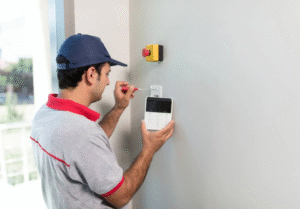
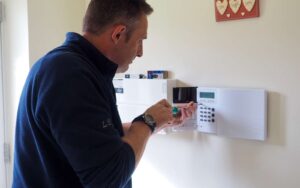
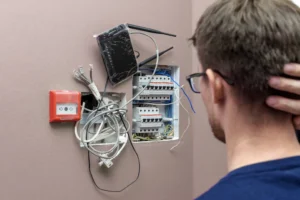
Being in charge of a busy office, warehouse facility or industrial plant involves constant responsibility. Fire safety cannot be compromised, as it is expected to offer protection to employees as well as valuable assets. Any minor event is capable of interfering with operations, ruining infrastructure, and causing long-term losses. That is why the development of fire alarm systems has become an important element of modern business and industry.
As opposed to simple smoke detectors that are meant to be installed at home, sophisticated fire alarm systems are constructed in complicated areas and increase risk. They integrate smart sensors and control panels, and real-time monitoring and develop a full safety network.
It is mandatory to invest in a modern fire alarm system as fire safety regulations have tightened and buildings are currently changing in shapes and sizes. It is a tactical move which sustains business, adherence and long term development.
Why Advanced Fire Alarm Systems Are Essential for Businesses
Facilities used in commerce and industry have problems that cannot be addressed by the mere system of alarm. A more dependable and intelligent approach is required to accommodate large occupancy, specialized equipment, and unusual fire hazards.
Reduced False Alarms and Operational Disruptions
False alarms are not just an inconvenience. They disrupt working processes, interrupt production and may result in unwarranted evacuations. A state of the art fire alarm system involves the multi-sensor technology which is used to differentiate between smoke, dust or steam that is not a fire hazard, and a real fire hazard.
This precision allows minimizing the false alarms, and operations continue running within the scope of ensuring high safety levels.

Scalable Design and Smart System Integration
Safety systems should increase with the increase in business. The advanced fire alarm systems have the ability to expand with ease and therefore, new zones, floors or devices can be added without changing the whole system completely.
These alarms are also able to be integrated with sprinklers, emergency lighting, HVAC and controlled exits. The safety components are automatically coordinated and provide a coordinated and efficient response in the event of an emergency.
How Addressable Fire Alarm Systems Improve Safety
The conventional fire alarm systems are only able to detect the general area or zone that has been involved. Addressable fire alarm systems bring the safety to a new level with its real-time information being precise.
Exact Location Identification
Every detector, pull station or alarm device has a different address. When something goes wrong, the system will automatically know which particular device it is. This will enable the emergency teams and facility managers to react quicker and more precisely, minimizing the amount of confusion and damage.
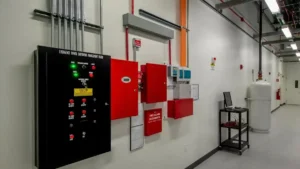
Faster Response and Preventive Maintenance
Addressable systems archive the history of events and the state of the system, hence, recurring problems or maintenance requirements are easier to find. Such an active strategy is used to eliminate failures or make the system reliable at its critical moments.
Key Features That Matter Most in Industrial Environments
All features are not equally valuable. In large commercial and industrial applications, there exist some capabilities that would be a big difference in terms of safety and efficiency.
Remote Monitoring and System Access
Fire alarm systems today can be remotely monitored using computers or mobile devices. You can get real time notifications of alarms, faults or maintenance problems whether you are off-site or off business hours. This enhanced transparency guarantees expedited decision-making and confidence.
Clear Voice Evacuation Messaging
Even in high stress cases, loud sirens are sufficient to trigger panic. Voice evacuation systems offer the best automated instructions that occupants should follow to the letter and include the instructions on what to do. This is due to the fact that it will decrease confusion and will result in a quicker and safer evacuation process.
Automatic Self-Testing and Diagnostics
It is necessary to use routine testing, yet manual checking may be time-consuming. High-tech systems do automatic diagnostics and keep an eye on the battery life, sensors and overall functionality. In case you have to draw attention to anything, the system alerts you before it is a big problem.
When Is the Right Time to Upgrade Your Fire Alarm System?
Most companies do not upgrade until something goes wrong with the system or an inspection problem occurs. Timely identification of the appropriate time to take action will help to avoid unnecessary risks.
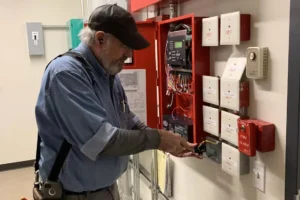
Aging Systems and Decreasing Reliability
Your fire alarm system is more than 10 to 15 years old, which means that it might not be up to the safety standards in the present day. Components that are old, technologies which are not up to date, and where there are scarce replacement parts may affect reliability and elevate the risk of failure.
Renovations, Expansion, and Code Compliance
Any type of building addition- new layouts, additional equipment, or increased spaces may have an impact on the coverage of fire detection. Fire safety codes are also subject to change. Upgrading makes sure that your system is in line with the latest regulations and you undergo inspection easily.
Conclusion
Your business is a symbol of years of working and spending. That should not be subjected to one fire incident. The new generation fire alarm systems have quicker detection, intelligent reactions, and reliable security to commercial and industrial buildings.
Now would be the time to take action in case of an upgrade or expansion of your facility or installation of a new system. Call us today to talk about installing a professional fire alarm system, trusted fire alarm maintenance services and integrated solution, which also integrates with access control and CCTV systems. The smarter fire alarm system is not only about compliance but also about saving lives, property, and sustaining success in the long run.
FAQs
Which Is the Difference Between Standard and Addressable Fire Alarm Systems?
Addressable systems locate the exact device on the zone, whereas conventional systems recognize the general zone in alarm and responses are faster and more precise.
What Is the Frequency of Commercial Fire Alarm Systems Inspection?
Regular professional checks must be provided at least once in a year, and regular monthly checks by the on-site employees, within the limits of the local regulations.
Are the Fire Alarm Systems Compatible with Other Building Technologies?
Yes. High-tech fire alarms are able to combine with the access control systems, HVAC and emergency lighting systems, and security systems to form a complete safety network.